Why Chill Cookie Dough? 7 Ways It Makes Better Cookies
Cookie dough can look ready for the oven as soon as it has been mixed. Giving it time to rest in the fridge can make a significant difference to the finished cookie.
Chilling helps control how quickly the dough spreads, allows the ingredients to settle and gives the flour time to absorb moisture. The result can be a thicker cookie with a richer flavour, crisp edges and a soft centre.
At Happy Crumb Bakery, temperature control forms an important part of creating our chunky NYC-style cookies. Here are seven reasons chilled cookie dough often produces a better bake.
Quick answer
Chilling cookie dough firms the butter, hydrates the flour and helps control spreading in the oven. It can create thicker cookies with deeper flavour, stronger browning and a softer centre.
Why Chill Cookie Dough?
1. Cold butter takes longer to melt
Butter begins melting when cookie dough enters the oven. The speed at which this happens affects how far the cookie spreads.
In warm dough, the butter may melt before the flour and eggs have formed enough structure to hold the cookie’s shape. The dough spreads outwards, creating a flatter and often crisper cookie.
Chilling firms the butter. This gives the outside of the cookie more time to set before the fat becomes fully liquid.
The principle is especially useful for large bakery-style cookies, where maintaining height helps protect the soft centre. King Arthur Baking also recommends giving larger cookie dough portions ample chilling time to help them retain a thick, puffy shape.
2. The flour has time to absorb moisture
Cookie dough contains moisture from ingredients such as butter, eggs, flavourings and sugar.
Immediately after mixing, some of this moisture remains unevenly distributed throughout the dough. Resting gives the flour time to absorb more of it.
As the dough hydrates, it becomes firmer and more consistent. A well-hydrated dough usually spreads more predictably and develops a more cohesive texture.
This process can help produce a cookie that feels substantial rather than thin or greasy.
3. Resting can deepen the flavour
Freshly mixed dough may taste sweet, buttery and chocolatey. Resting allows those individual flavours to blend more evenly.
Some of the sugar continues dissolving into the available moisture. Flour hydration also changes how the dough tastes and browns during baking.
The difference may be subtle after a brief chill, then more noticeable after several hours. Tests published by King Arthur Baking and Serious Eats found that resting cookie dough can improve flavour and alter spreading, although the effect varies by recipe.
The recipe still matters. Chilling cannot compensate for incorrect ingredient ratios, poor-quality chocolate or too much raising agent. It works as part of a balanced baking method.
4. Chilled dough creates more controlled spreading
A cookie needs some spread. Too little can leave it dense and cakey, while too much can produce a thin biscuit with an overcooked centre.
Chilling gives the baker greater control over this process.
The cookie begins baking from a more consistent temperature, and the fat melts gradually. This makes it easier to achieve a defined edge while keeping enough thickness through the middle.
Several other factors also influence spread:
- The amount of flour and fat
- The type of sugar used
- Dough portion size
- Oven temperature
- Baking tray temperature
- The surface or lining on the tray
- The quantity and size of chocolate pieces
Cookie dough placed on a hot baking tray can begin melting before it reaches the oven. Starting with a cool tray helps preserve the benefit of chilling.
5. Larger cookies hold onto more moisture
A thick cookie bakes differently from a small, flat one.
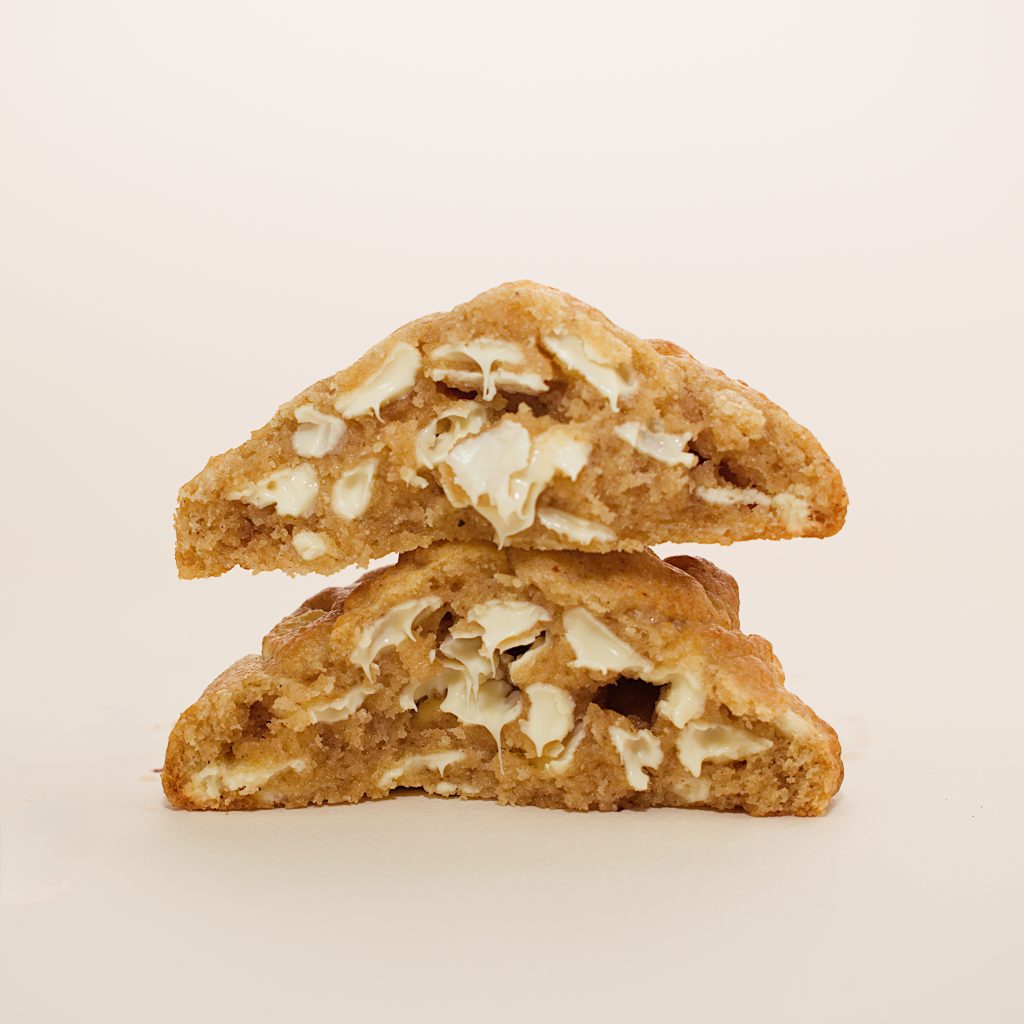
The outside receives direct heat and begins to brown first. The centre heats more gradually and retains more moisture. This creates the contrast associated with NYC-style cookies: a lightly crisp exterior surrounding a soft, gooey middle.
A flatter cookie has less distance between its surface and centre. Moisture escapes more quickly, so the whole cookie can become crisp before a thick crust and soft centre have time to develop.
Chilled dough supports a taller shape, which helps preserve that internal moisture.
6. Chilling makes portioning more consistent
Soft dough can be sticky and difficult to shape. Chocolate chunks, fillings and other inclusions may move around as the portions are handled.
Once the dough is chilled, it becomes easier to weigh and shape into consistent portions.
Consistency matters because cookies of different sizes bake at different speeds. A smaller cookie may become dry while a larger one on the same tray remains underbaked.
Professional bakeries control portion weight, dough temperature and spacing so each batch bakes as evenly as possible.
At Happy Crumb Bakery, our cookies are made as generous portions designed to deliver a substantial soft centre. Consistent portions help us recreate that experience across every batch.
7. Cold dough supports better texture contrast
The most satisfying cookies often combine several textures:
- A lightly crisp edge
- A browned outer surface
- A chewy layer beneath the crust
- A soft centre
- Melted pockets of chocolate
Starting with cold dough slows the early stages of spreading. The outer surface begins setting while the middle remains cooler.
As baking continues, the surface develops colour and flavour through browning and caramelisation. Meanwhile, the centre cooks more gently.
The cookie continues setting after it leaves the oven, a process known as carryover cooking. Removing the tray at the correct point allows residual heat to finish the centre without drying it out.
How long should cookie dough be chilled?
The ideal chilling time depends on the recipe, portion size and desired result.
As a general guide:
- 30 minutes: Firms very soft dough and reduces immediate spreading
- 2 to 4 hours: Allows more thorough cooling and hydration
- Overnight: Can develop flavour further and provide a consistently firm dough
- Frozen portions: Useful for long-term storage and controlled bakery-style baking
Longer does not automatically mean better. Some recipes become too firm, dry or cakey after an extended rest. Baker Helen Goh has also noted that the ideal chilling period depends on the style of cookie, with excessive chilling producing a cakier result in some recipes.
Follow the recipe first, then adjust the resting time based on the result you prefer.
Should you chill the dough before or after portioning?
Portioning the dough before chilling usually makes the baking process easier.
Fresh dough is softer and can be weighed without needing to force a spoon or scoop through a solid block. The individual portions then chill evenly and can move directly onto a baking tray.
For very sticky dough, a short initial chill may make portioning easier. Shape the portions once the dough becomes manageable, then return them to the fridge.
Can cookie dough be frozen?
Many types of cookie dough freeze well.
Portion the dough first, place the pieces on a lined tray and freeze until firm. Transfer the frozen portions into a suitable airtight container or freezer bag.
Freezing helps preserve the shape of large cookies and allows smaller batches to be baked when needed. Baking instructions may need adjusting because frozen dough takes longer to heat through.
Correct storage, clear date labelling and careful allergen separation remain important when preparing dough in advance.
Does every cookie dough need chilling?
Some recipes are designed to be baked immediately. Others depend heavily on resting.
A thin, crisp cookie may need more spread. A thick bakery-style cookie requires firmer dough and greater control.
The intended result should guide the method.
When a recipe instructs you to chill the dough, skipping the step can change the height, texture, colour and baking time. Treat the resting period as part of the recipe rather than empty waiting time.
Why we control dough temperature at Happy Crumb Bakery
Our cookies are designed around a thick, generous structure.
We want the outside to develop colour and a delicate crust while the centre stays soft. Achieving that balance requires control over the recipe, ingredient temperature, portion size, resting time and baking process.
Chilling forms one part of that system.
It helps each cookie hold its shape and creates the conditions needed for a proper bakery-style texture. Chocolate chunks and fillings remain distributed throughout the dough, producing rich melted pockets in every bite.
Experience thick NYC-style cookies at home
Happy Crumb Bakery cookies are baked in small batches using real butter, premium chocolate and carefully selected inclusions.
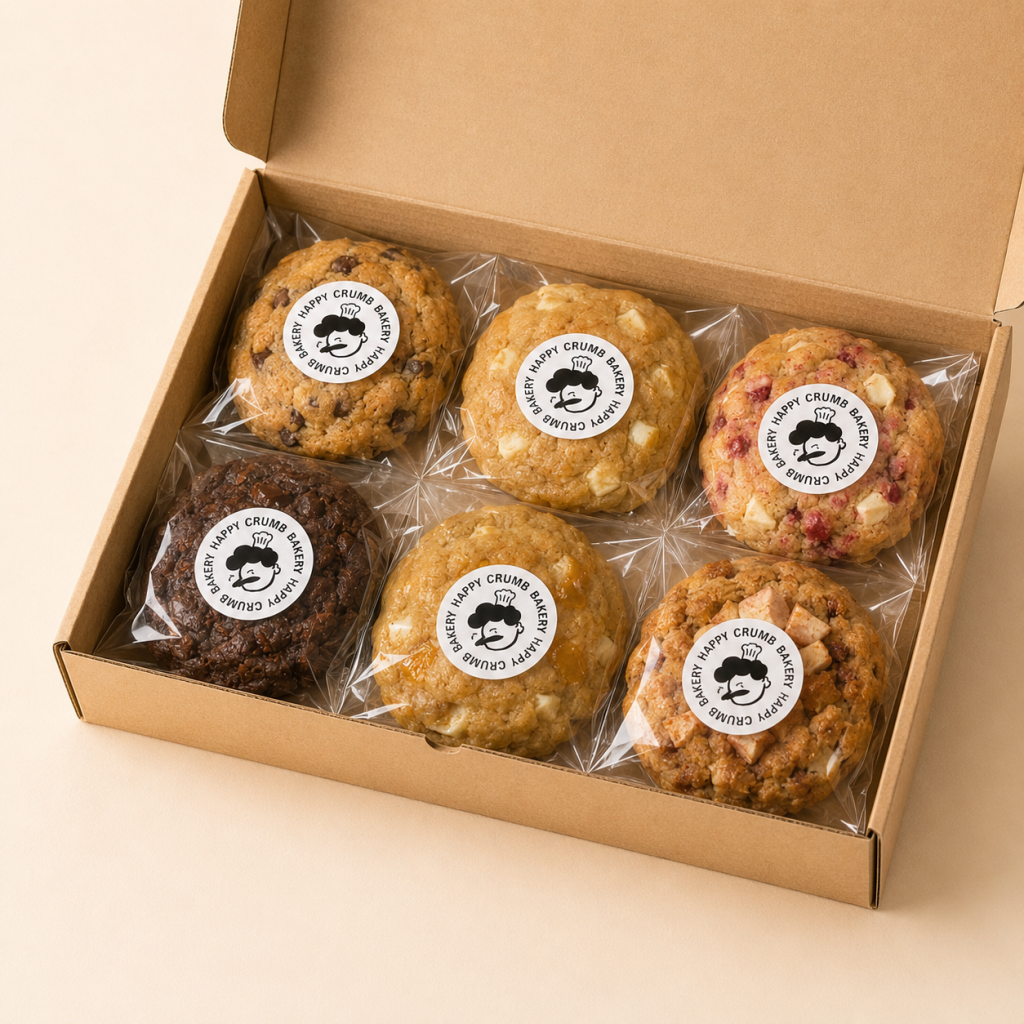
You can build your own mixed box, explore our latest flavours and choose a future dispatch date. Our cookies are individually wrapped to help maintain freshness during nationwide delivery.
For the best texture, warm your cookie gently before serving and allow the chocolate inside to soften.
Explore our range of gourmet cookies and build your own box for UK-wide delivery.