
Gourmet cookies are thick, generous and designed to make an impression.
Gourmet cookies are premium cookies made with greater attention to flavour, texture, ingredients and presentation. They are often thicker and more generously filled than standard cookies, although there is no fixed size, recipe or style that defines a gourmet cookie.
Some bakeries use the term for an elevated version of a familiar chocolate chip cookie. Others develop cookies around distinctive flavour combinations, fillings or familiar desserts.
At Happy Crumb Bakery, we make thick, soft-baked cookies influenced by New York bakery styles and familiar desserts. Our recipes focus on the balance between dough, fillings, flavour and texture.
This guide explains what gourmet cookies are, how they differ from ordinary biscuits, what makes a great cookie, how to choose flavours and how to store, warm and serve them at their best.
This guide explains what gourmet cookies are, how they differ from ordinary biscuits, what makes a great cookie, how to choose flavours and how to store, warm and serve them at their best. shop our gourmet cookies here.
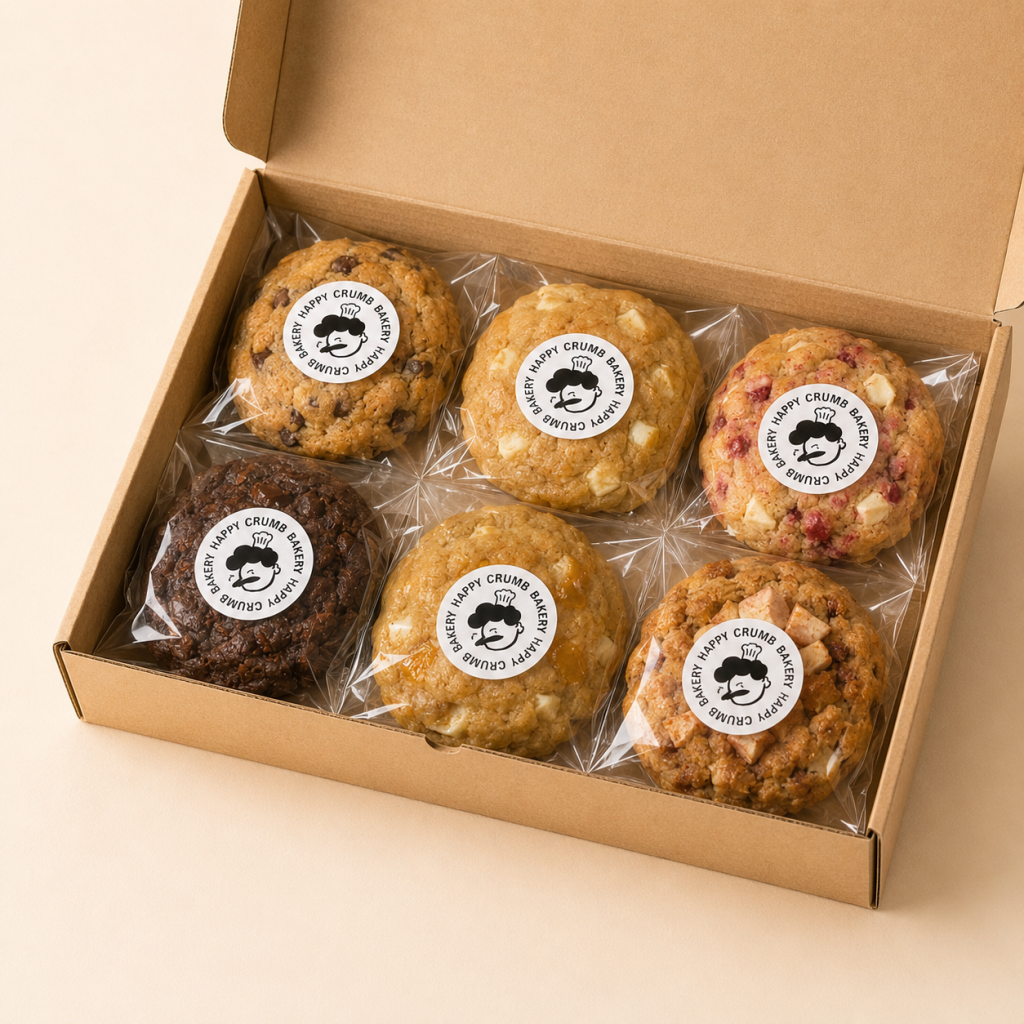
What is a gourmet cookie?
A gourmet cookie is a premium cookie made with greater attention to flavour, texture, ingredients and presentation.
Most gourmet cookies share several characteristics:
- A larger, thicker shape
- A soft or gooey centre
- Generous chocolate, fillings or inclusions
- Carefully balanced flavours
- Small-batch or artisan production
- Premium presentation and packaging
- Flavours that go beyond standard supermarket varieties
Size alone does not make a cookie gourmet. A large cookie can still be dry, overly sweet or lacking in flavour.
The real difference comes from how the dough is developed, how the ingredients work together and how carefully the cookie is baked.
A well-made gourmet cookie should feel intentional from the first bite to the last.
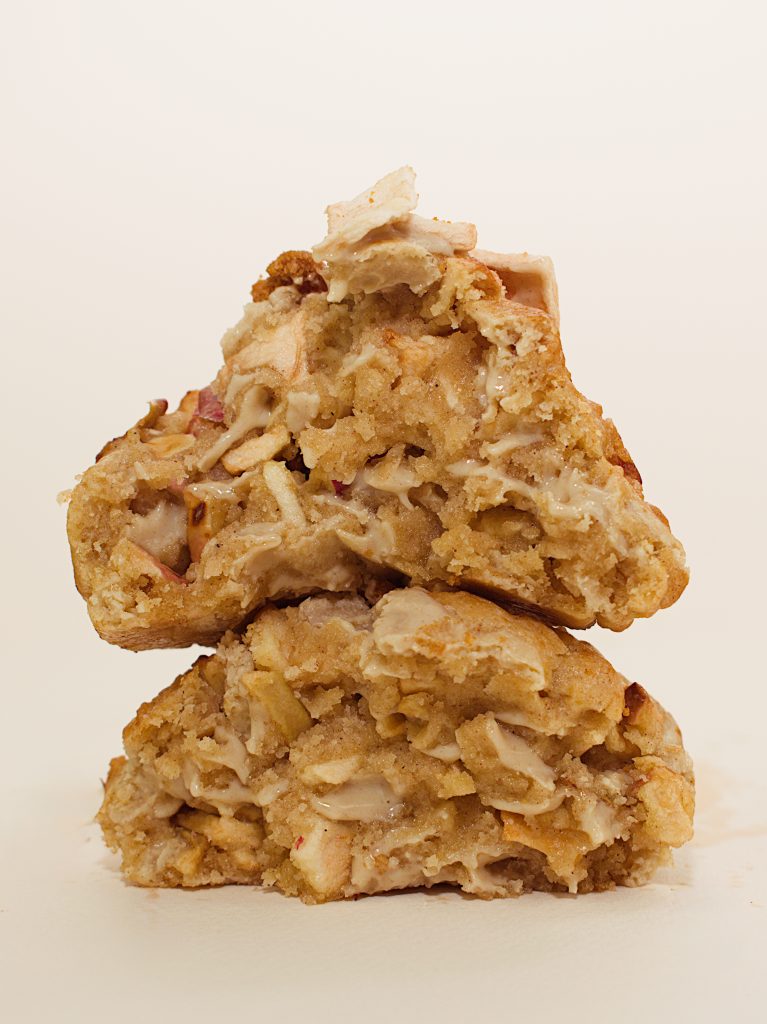
Gourmet cookies, biscuits and standard cookies
In Britain, the words “cookie” and “biscuit” are often used interchangeably. They usually describe different styles of bake.
A traditional biscuit tends to be thinner, firmer and crisp throughout. Digestives, shortbread and custard creams are familiar examples.
A cookie usually contains more moisture and has a softer texture. Chocolate chip cookies may have crisp edges, a chewy middle or a fully soft-baked finish.
Gourmet cookies take this further. They are commonly thicker, richer and more substantial, with flavour combinations closer to a plated dessert.
| Product | Typical texture | Typical size | Common flavours | Best suited to |
|---|---|---|---|---|
| Biscuit | Crisp or crumbly | Small | Plain, chocolate, spiced | Tea breaks and everyday snacking |
| Standard cookie | Crisp, chewy or soft | Small to medium | Chocolate chip, double chocolate | Everyday treats |
| Gourmet cookie | Thick, soft and generously filled | Medium to large | Premium chocolate, desserts, fruit, fillings | Gifting, sharing and indulgent treats |
Neither style is automatically better. They serve different occasions.
A crisp biscuit works beautifully with tea. A thick gourmet cookie offers a fuller dessert experience.
What makes a gourmet cookie?
What makes a cookie gourmet is the combination of recipe development, ingredient quality, texture, flavour balance and careful baking. Size or price alone does not determine whether a cookie is gourmet. The dough needs to support its fillings, the flavours need to work together and the bake needs to deliver the intended texture consistently.
Several elements determine the final result.
Quality ingredients
Cookies contain relatively few core ingredients, which means every ingredient has a noticeable effect.
Butter brings richness and flavour. Sugar affects sweetness, spread and texture. Flour provides structure. Eggs add moisture and help bind the dough.
Chocolate quality matters too. Proper chocolate chunks melt differently from cheaper baking chips and usually provide a fuller cocoa flavour.
Fruit, nuts, spices and fillings also need to taste distinct once they are baked into a rich dough.
Premium ingredients cannot rescue a poorly balanced recipe, though they give a skilled baker better materials to work with.
A properly developed dough
Cookie dough needs the correct ratio of fat, sugar, flour and moisture.
Too much flour creates a dry or cakey result. Too much fat may cause excessive spreading. Too much sugar can make the cookie intensely sweet and structurally fragile.
The dough must also support any added chocolate, fruit or fillings.
A heavily loaded cookie needs enough structure to hold together. A cookie with too little filling may look substantial while tasting mostly of plain dough.
Resting and chilling
Many thick cookie recipes benefit from resting before baking.
Resting allows the flour to absorb moisture more evenly. Chilling firms the fat, which helps control how quickly the cookie spreads in the oven.
The result can be a thicker shape, a more developed flavour and a stronger contrast between the outside and centre.
The exact resting time depends on the recipe. Longer does not automatically mean better. Dough can become overly firm, dry or difficult to bake evenly when held for the wrong length of time.
Controlled baking
A thick cookie continues cooking after it leaves the oven.
Removing it at the right point allows the centre to finish setting as the cookie cools. Leaving it in the oven until the middle appears completely firm often produces a dry cookie once fully cooled.
Oven temperature, dough weight, tray material and spacing all affect the bake.
Consistency becomes especially important in a bakery. Every customer should receive the texture the recipe was designed to produce.
Balanced sweetness
A gourmet cookie should taste indulgent without becoming exhausting.
Chocolate type, salt, acidity, fruit and toasted flavours can all balance sweetness.
Dark chocolate brings bitterness. Raspberries and cherries add acidity. Peanut butter contributes salt and roasted depth. Spices create warmth and complexity.
These contrasts make each bite more interesting and help the flavour remain enjoyable across a full cookie.
What is an NYC-style cookie?
An NYC-style cookie is commonly thick, oversized and packed with chocolate or other inclusions.
The name refers to the substantial bakery cookies associated with New York rather than a single protected recipe.
A typical NYC-style cookie may have:
- A tall, rounded shape
- A deeply baked exterior
- A soft or molten centre
- Large chocolate chunks
- A generous individual portion
- Enough structure to remain thick during baking
Some versions are dense and doughy. Others are soft and tender. Certain bakeries add nuts, ganache, caramel or filled centres.
The defining feature is the contrast between the substantial exterior and indulgent middle.
Happy Crumb Bakery’s cookies are influenced by this thick, soft-baked style, then developed around our own dough and dessert-inspired flavour ideas.
Thick, chewy or gooey: which texture is best?
There is no universal perfect cookie texture.
Preference usually falls into one of four groups.
Crisp cookies
Crisp cookies contain less retained moisture and are baked until firm throughout.
They store well and pair naturally with hot drinks. People who enjoy biscuits often prefer this style.
Chewy cookies
Chewy cookies bend before breaking and have a dense, satisfying bite.
Sugar choice, moisture and baking time contribute to chewiness. Brown sugar is often associated with a softer, chewier result because it contains molasses and retains moisture.
Soft-baked cookies
Soft-baked cookies feel tender through the centre with a lightly set exterior.
They offer richness without requiring a molten middle and are particularly suitable for flavours containing chocolate chunks, fruit or crumb toppings.
Gooey cookies
Gooey cookies have a very soft centre, especially when served warm.
A good gooey cookie should still be properly baked and structurally sound. Raw flour or uncooked dough is a food-safety issue, not a desirable texture.
For postal cookies, the recipe needs to balance softness with enough stability to survive packing and delivery.
Why cookie weight matters
Weight affects far more than portion size.
A heavier dough ball takes longer for heat to reach the centre. This gives the outside time to develop colour while the middle remains soft.
Smaller cookies bake through more quickly and often produce a more uniform texture.
Happy Crumb Bakery’s signature cookies weigh approximately 120g before baking. That size provides enough depth for a soft centre and gives room for generous chocolate, fruit and other inclusions.
Larger cookies also feel closer to an individual dessert. Some customers eat one at a time, while others divide them into halves or quarters for tasting and sharing.
When comparing cookie prices, weight provides useful context. A premium 120g bakery cookie cannot be compared directly with a small packaged biscuit using the price of one piece alone.
The role of chocolate in gourmet cookies
Chocolate is often the main flavour in a gourmet cookie, so the type and format matter.
Milk chocolate
Milk chocolate is smooth, creamy and familiar.
It works well in classic cookie dough and pairs easily with vanilla, caramel, nuts and fruit.
Because milk chocolate is relatively sweet, the dough needs enough salt and flavour to prevent the finished cookie from becoming one-dimensional.
Dark chocolate
Dark chocolate contributes bitterness and deeper cocoa notes.
It balances sweet dough particularly well and pairs naturally with peanut butter, coffee, cherry and orange.
The cocoa percentage changes the flavour considerably. Higher percentages usually taste more intense and less sweet.
White chocolate
White chocolate has a creamy, buttery sweetness.
It works especially well with tart fruit, pistachio, raspberry, citrus and warm spices.
White chocolate can become overly sweet when paired with a highly sugared dough, so balance remains important.
Chocolate chunks and chips
Chocolate chips are designed to retain much of their shape during baking.
Chunks and chopped chocolate create less uniform pockets, with some pieces remaining distinct and others melting into the dough.
Neither format is automatically superior. The choice depends on the texture and appearance the baker wants to achieve.
Dessert-inspired cookies
Dessert-inspired cookies translate the flavours of another dessert into cookie form.
The strongest versions capture the character of the original while still eating like a cookie.
A raspberry ripple cookie, for example, needs more than pink colouring. It should combine creamy vanilla or ice-cream-inspired notes with genuine raspberry flavour and enough acidity to create the familiar ripple effect.
An apple crumble cookie should include cooked apple flavour, warming spice and a crumb-like texture.
A sticky toffee cookie needs deep caramelised notes rather than plain sweetness.
This style of product development allows familiar desserts to be experienced in a new form. It also gives customers an immediate flavour reference when choosing a box.
Happy Crumb Bakery has developed cookies inspired by desserts and nostalgic flavours including:
- Apple Crumble
- Cherry Bakewell
- Sticky Toffee
- Tiramisu
- Bread and Butter Pudding
- Carrot Cake
- Raspberry Ripple
- Mango and Passion Fruit Ice Cream
Availability changes as seasonal collections are introduced, so the current menu may feature a mixture of signature cookies and limited-edition flavours.
Signature flavours and limited editions
A strong cookie menu usually contains both permanent favourites and rotating flavours.
Signature cookies
Signature cookies give returning customers consistency.
Classic chocolate, white chocolate and intensely chocolatey flavours appeal to a wide audience. They also provide a benchmark for the bakery’s dough, baking style and chocolate quality.
These are often the safest choices for gifts, offices and events where the recipients’ preferences are unknown.
Limited-edition cookies
Limited editions give customers a reason to return and explore something new.
Seasonal ingredients, nostalgic desserts and event-specific ideas can all inspire a temporary collection.
A limited-edition flavour should still meet the same quality standard as the permanent menu. Novelty attracts attention, though flavour and texture determine whether someone orders again.
Mixed boxes
Mixed boxes work well for customers who want variety.
They allow several flavours to be tasted without committing to a full box of one kind. They are also practical for families, offices and gifts.
The main risk is choice overload. A clear menu, useful descriptions and sensible box sizes make the selection process easier.
How to choose the right cookie flavours
Start with the occasion and the preferences of the people eating them.
For chocolate lovers
Choose a combination of classic chocolate, white chocolate and darker chocolate flavours.
A box with several chocolate intensities creates variety without moving too far from familiar tastes.
For adventurous eaters
Include limited editions and dessert-inspired flavours.
Fruit, nut, coffee and spiced cookies often create a more varied tasting experience.
For a gift
Choose recognisable flavours alongside one or two distinctive options.
This keeps the box approachable while giving it a sense of discovery.
Presentation also matters. Individually wrapped cookies can be useful when the box will be shared across several days or distributed among a group.
For an office
Prioritise broad appeal, clear allergen information and simple distribution.
A mixture of chocolate-based flavours usually works well. Larger orders may benefit from individual wrapping or branded presentation.
For an event
Think about how the cookies will be served.
Whole cookies create a generous individual gift. Halves or tasting portions can work for dessert tables and hospitality settings.
The event date, guest count, storage facilities and dietary requirements should be confirmed before ordering.
For yourself
Choose the flavours you genuinely enjoy.
A build-your-own box gives you control over the balance. You can fill it with favourites, test the latest collection or split the box between familiar and unfamiliar flavours.
How many cookies should you order?
The right quantity depends on their size, how they will be served and whether other food is available.
As a broad guide:
| Occasion | Suggested quantity |
|---|---|
| Personal treat over several days | 6 cookies |
| Couple or small household | 6 to 9 cookies |
| Family sharing | 9 to 12 cookies |
| Small gathering | 12 to 24 cookies |
| Office or event | One per person, adjusted for serving size |
| Tasting table | Half or quarter portions may be appropriate |
A 120g gourmet cookie is substantial. Some people will happily eat a whole cookie, while others may prefer half.
For events, ordering solely by guest count can create waste when cookies are served alongside a full meal. Serving format should shape the quantity.
For individually gifted cookies, one whole cookie per recipient gives the clearest experience.
Are gourmet cookies suitable for gifts?
Gourmet cookies work particularly well as gifts because they are easy to share, visually appealing and suitable for many occasions.
They can be sent for:
- Birthdays
- Thank-you gifts
- New homes
- Congratulations
- Cast and crew gifts
- Staff appreciation
- Product launches
- Press nights
- Client gifts
- Seasonal celebrations
A cookie gift also avoids some of the practical issues associated with cakes. It does not need cutting, serving equipment or immediate refrigeration in most cases.
The best gift boxes include clear flavour information, allergen details and storage instructions.
A personal message or branded presentation can make a business gift feel more considered.
Cookies by post
Postal cookie delivery allows fresh bakery products to reach customers outside the bakery’s local area.
The process requires more planning than placing ordinary biscuits in a box.
A postal cookie needs:
- A recipe that stays soft for the intended delivery period
- Packaging that limits air exposure
- Protection from crushing
- A box that prevents excessive movement
- Accurate dispatch timing
- Clear storage and reheating instructions
Individual wrapping can help preserve freshness and protect flavours. It also makes the cookies easier to share or save for later.
Happy Crumb Bakery bakes online orders to order and offers cookie delivery across the UK. Current delivery options and dispatch dates should always be checked during ordering, especially when the cookies are required for a specific event.
Courier delays can occur, so customers ordering for a fixed date should allow an appropriate delivery margin.
How long do gourmet cookies stay fresh?
Freshness depends on the recipe, filling, packaging and storage conditions.
Many sealed soft-baked cookies remain at their best for several days. Happy Crumb Bakery’s individually sealed cookies typically have a recommended eating window of around five to seven days.
This does not mean every cookie changes in the same way.
A chocolate-heavy cookie may retain moisture differently from one containing fruit, crumble or exposed toppings.
For the best result:
- Keep the cookie sealed until you plan to eat it.
- Store it in a cool, dry place.
- Avoid direct sunlight and warm rooms.
- Follow any flavour-specific instructions provided.
- Freeze cookies you do not expect to eat within the recommended window.
Refrigeration is not always the best option. Fridges can dry baked goods and may make butter-rich cookies feel firm. Refrigerate only when the product instructions or filling require it.
Can you freeze gourmet cookies?
Most baked cookies freeze well when properly wrapped.
Freezing is useful when ordering a larger box, saving seasonal flavours or spacing treats across several weeks.
How to freeze baked cookies
Keep individually wrapped cookies in their original sealed packaging where suitable.
Place them inside an airtight freezer container or freezer bag for extra protection. Label the container with the flavour and freezing date.
Avoid placing heavy frozen items on top of the cookies.
How to defrost them
Remove the required number of cookies from the freezer and allow them to defrost while still wrapped.
Keeping the wrapper closed helps prevent condensation settling directly onto the cookie.
Once fully defrosted, warm the cookie according to the bakery’s instructions when you want a softer centre.
Cookies should not be repeatedly frozen, defrosted and refrozen.
How to warm a gourmet cookie
Warming restores softness and makes the chocolate more fluid.
The correct method depends on the cookie, its size and whether it contains fillings or toppings.
Oven method
An oven gives the most even result.
Place the cookie on a baking tray and warm it at a low temperature for a few minutes. Check frequently, since an already baked cookie can dry out when overheated.
Allow it to stand briefly before eating. The centre and chocolate may be hotter than the exterior suggests.
Microwave method
A microwave is faster and produces a very soft texture.
Use a short burst, then check the cookie before adding more time. A few additional seconds can make a significant difference.
Microwaving for too long may make the cookie tough once it begins to cool.
Air fryer method
An air fryer can refresh the outside while warming the centre.
Use a low temperature and a short heating time. Strong airflow can move loose toppings, baking paper or crumbs.
Always follow the specific instructions supplied with your order where available.
Serving ideas
A gourmet cookie can be eaten straight from the packet, warmed or turned into a fuller dessert.
Cookie and ice cream
Warm the cookie and add a scoop of vanilla ice cream.
The temperature contrast works especially well with chocolate, fruit and caramel flavours.
Cookie tasting board
Cut several flavours into quarters and arrange them on a board.
Add labels so guests know what they are trying. This format works well for parties, office tastings and informal events.
Cookie sundae
Layer pieces of warm cookie with ice cream, sauce and whipped cream.
Choose toppings that complement the cookie rather than covering its flavour.
With coffee
Dark chocolate, tiramisu, caramel and nut flavours pair naturally with coffee.
A less sweet coffee often balances a rich cookie more effectively than a heavily flavoured drink.
With tea
Fruit, white chocolate, vanilla and spiced cookies suit tea particularly well.
The best pairing depends on how strong and sweet the cookie is.
As part of a dessert table
Cookies add height, colour and variety to a dessert display.
Whole cookies provide visual impact. Halves and quarters allow guests to sample more flavours.
Vegan and wheat-free gourmet cookies
Plant-based and wheat-free cookies can still be thick, soft and indulgent.
The recipe needs to be developed around the dietary requirement rather than treating substitutions as an afterthought.
Plant-based cookies
Plant-based recipes replace ingredients such as butter, milk and eggs.
The alternatives affect spread, flavour, browning and texture, so direct one-for-one substitution may produce inconsistent results.
A strong plant-based cookie should stand on its own for flavour and texture.
Wheat-free cookies
Wheat-free cookies use alternative flours or flour blends.
Removing wheat changes structure because gluten helps hold standard cookie dough together. The recipe may need a blend of ingredients to achieve the correct bite.
“Wheat-free” and “gluten-free” are not automatically interchangeable. Oats, shared equipment and cross-contamination controls can all affect suitability.
Allergy considerations
Customers with allergies should read the full allergen information for each flavour, review the official UK fhttps://www.gov.uk/government/publications/food-allergy-and-intolerance-advice-for-consumersood allergy guidance, and contact the bakery when they need clarification.
Happy Crumb Bakery produces its cookies in a kitchen that handles major allergens. This environment will not be suitable for every severe allergy.
Dietary labels should never replace an individual assessment of the allergen information.
Handmade and small-batch production
Small-batch baking gives a bakery greater control over dough condition, portioning and bake quality.
It also means slight visual variation can occur.
One cookie may have a different chocolate pattern or surface shape from another. These variations are part of handmade production, provided weight, bake and quality remain consistent.
Uniformity matters most where it affects the customer experience:
- Portion weight
- Ingredient distribution
- Bake level
- Allergen controls
- Packaging
- Freshness
- Flavour accuracy
A handmade product should look carefully made, while retaining the natural differences created during shaping and baking.
Are expensive cookies worth it?
Price reflects several factors:
- Cookie weight
- Ingredient quality
- Amount of chocolate and filling
- Labour
- Small-batch production
- Individual packaging
- Delivery materials
- Product development
- Business overheads
A premium price does not guarantee a great cookie.
The useful question is whether the product delivers enough flavour, texture, portion size, freshness and presentation to support its price.
Customer preferences matter too. Someone seeking a small crisp biscuit will gain little value from a thick 120g cookie. Someone seeking an indulgent bakery dessert may consider the larger product better value.
Compare weight, ingredients, freshness and delivery format before comparing the price per cookie.
What to look for when ordering gourmet cookies online
A trustworthy online bakery should make the buying process clear.
Look for the following information.
Accurate product descriptions
The description should explain the main flavours, chocolate, fillings and texture.
Pictures provide useful guidance, though the written description helps customers understand what is inside.
Full allergen information
Allergens should be easy to find before checkout.
Contact the bakery before ordering when the information does not answer your specific concern.
Clear box sizes
You should know how many cookies you are buying and whether the box contains fixed flavours or allows customisation.
Delivery information
Check dispatch dates, delivery estimates and whether the service is guaranteed.
Orders for birthdays, events and travel should include a sensible time margin.
Storage instructions
The bakery should explain how long the cookies remain at their best and whether they can be frozen or warmed.
Genuine product photography
Photography should represent the actual size, thickness, filling and finish as accurately as possible.
Handmade products will vary slightly, though the delivered product should remain recognisable.
Contact details
A clear contact method matters when you need to discuss allergens, event dates or order changes.
Build-your-own cookie boxes
A build-your-own box gives customers control over every flavour.
You can create a box around one favourite, divide it evenly across several flavours or use it as a tasting collection.
At Happy Crumb Bakery, customers can choose from the available signature and limited-edition cookies and build boxes in several sizes.
A balanced first box might include:
- Two familiar chocolate flavours
- One white chocolate or vanilla-based option
- One fruit-led cookie
- One dessert-inspired flavour
- One wildcard from the latest collection
Customers who already know their favourite can fill most or all of the box with that flavour.
Choice should make the experience better. There is no requirement to maximise variety.
Cookie subscriptions
A cookie subscription provides a recurring box at an agreed frequency.
It suits customers who order regularly, enjoy trying new flavours or want a dependable monthly treat.
Before choosing a subscription, check:
- The number of cookies per delivery
- Delivery frequency
- Whether flavours rotate
- Whether preferences can be changed
- The saving compared with individual orders
- How pauses and cancellations work
- Whether delivery is included
Subscriptions work best when they remove effort from a purchase the customer already enjoys.
The financial saving matters, though access to seasonal flavours and the experience of receiving a regular box can also provide value.
Corporate and event cookies
Cookies can be adapted for business gifting, events and hospitality.
Common uses include:
- Employee rewards
- Client gifts
- Press nights
- Cast and crew gifts
- Product launches
- Conferences
- Office celebrations
- Hotel welcome gifts
- Brand activations
- Train and travel hospitality
Corporate orders may include flavour selection, individual wrapping, branded stickers, printed packaging or edible branded toppers.
The best format depends on the purpose.
An individually wrapped cookie is practical for conferences and travel. A presentation box may suit a client gift. Branded cookies can make the product part of an event or campaign.
Businesses should provide the required date, quantity, delivery location, budget and branding requirements as early as possible.
Large or customised orders require enough time for design approval, printed materials, production and delivery.
Common gourmet cookie mistakes
Making the cookie too sweet
Large portions amplify every flavour.
A sweetness level that works in a small biscuit may become overwhelming in a 120g cookie.
Salt, darker chocolate, fruit acidity and toasted flavours can create balance.
Adding too many elements
More fillings do not always create a better cookie.
A flavour becomes confusing when several components compete for attention. The customer should be able to identify the main idea.
Underbaking without control
A soft centre needs careful recipe development and baking.
Raw dough, floury centres and structural collapse indicate an incomplete bake rather than desirable gooeyness.
Overbaking for stability
Baking a postal cookie until completely firm may make packing easier, though the customer receives a dry product.
Recipe design and protective packaging should create stability without sacrificing texture.
Following novelty ahead of flavour
A visually dramatic cookie may attract attention online.
Repeat purchases depend on whether it tastes good.
Trends can inspire product development, though each flavour needs a clear purpose and a balanced result.
Frequently asked questions
What makes gourmet cookies different?
Gourmet cookies use carefully developed recipes, generous inclusions and premium presentation. They are often thicker, larger and softer than standard packaged cookies.
Are gourmet cookies meant to be gooey?
Some are gooey, while others are chewy or soft-baked. The centre should be properly baked according to the recipe.
How big is a gourmet cookie?
There is no fixed size. Happy Crumb Bakery’s signature cookies weigh approximately 120g before baking.
How long do postal cookies stay fresh?
Freshness varies by recipe and packaging. Happy Crumb Bakery’s sealed cookies are generally best enjoyed within approximately five to seven days.
Can I freeze delivered cookies?
Most baked cookies can be frozen when sealed and protected inside an airtight freezer container.
Should I refrigerate gourmet cookies?
Usually, a cool and dry cupboard is preferable. Follow the instructions provided for cookies containing fillings that require refrigeration.
Can I warm cookies in the microwave?
Yes. Use a short burst and check the temperature before adding more time.
Are gourmet cookies suitable for sharing?
Yes. Thick cookies can be divided into halves or quarters, particularly for tastings and dessert tables.
Can I send cookies as a gift?
Yes. Postal cookie boxes work well for birthdays, thank-you gifts, celebrations and corporate occasions.
Can businesses order branded cookies?
Yes. Happy Crumb Bakery offers bespoke cookie and cupcake orders for companies, events, theatres, productions and other organisations.
Do you make vegan cookies?
Plant-based flavours are available within selected collections. Check the current menu and full allergen information before ordering.
Are wheat-free cookies safe for people with coeliac disease?
That depends on ingredients, production controls and cross-contamination risk. Happy Crumb Bakery handles major allergens in its kitchen, so customers should review the allergen information and contact the bakery before ordering.
Finding your perfect cookie box
The ideal gourmet cookie depends on what you enjoy.
Choose classic chocolate flavours for familiarity. Add fruit, nuts, coffee or dessert-inspired options for contrast. Select a mixed box when several people are sharing, or build the entire box around a proven favourite.
Pay attention to freshness, weight, ingredient quality and storage guidance.
Most importantly, choose a bakery whose style matches your preference.
Happy Crumb Bakery creates thick, soft-baked cookies inspired by classic desserts and nostalgic flavours. Every online box is baked to order, with signature favourites and limited-edition collections available for delivery across the UK.
Explore the current flavours and build a box that belongs entirely to you.
Pingback: How to Store Cookies and Keep Them Fresh | Happy Crumb Bakery
Pingback: Cookie Delivery UK: 7 Things to Know Before Ordering | Happy Crumb Bakery